Bienvenido a Lishui Tengyu Pet Food Co., Ltd.
[email protected]

 English
 Español
 Deutsch


Noticias de la industria

Noticias de la industria
How Should Puppy Jerky Treats Differ From Adult Dog Jerky?
Puppies are not simply smaller adult dogs when it comes to snacks. Their mouths are smaller, their teeth are still changing, and many owners hand out treats several times a day during early training. Because of this, puppy jerky treats need a different brief from jerky made for adult dogs, even when the meat source looks the same on the label.
Why Does Piece Size Matter More for Puppies?
A jerky strip cut for an adult dog can be awkward for a young puppy. A strip that is too long gets dragged around the floor, and one that is too thick can be hard to bite through. Small pieces solve one problem but raise another, since a piece that fits whole in the mouth may be swallowed without chewing.
Well-made puppy jerky treats sit between these two extremes. They are easy to hold, simple to tear by hand, and cut to a consistent width, so an owner can break off a smaller portion for a toy breed or hand a longer piece to a larger puppy. Consistent thickness also matters on the production side. Strips of uneven thickness dry unevenly, and one batch can then contain both brittle and damp pieces.
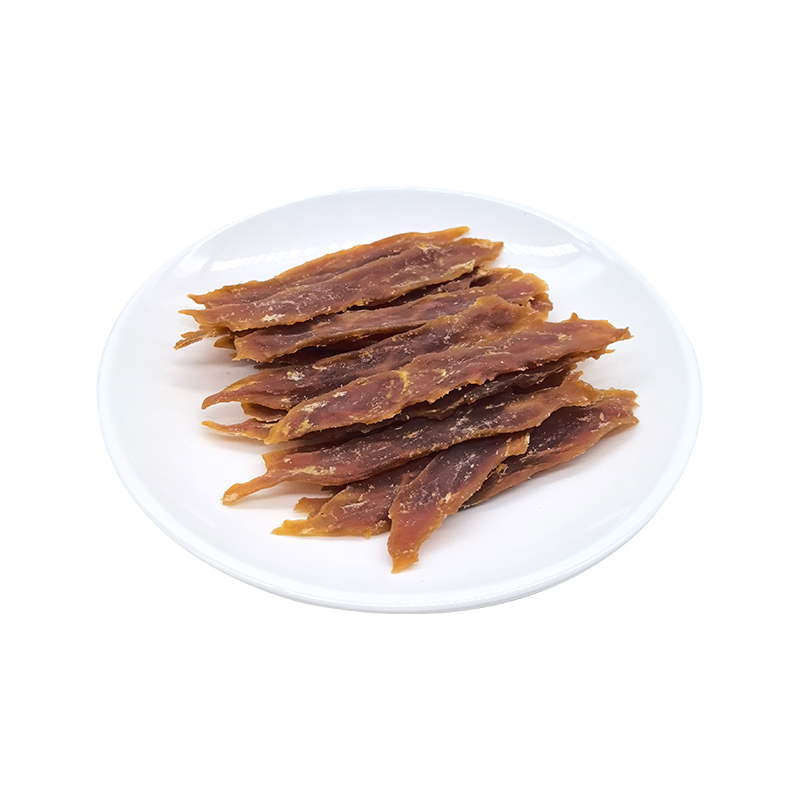
Is Softer Always Better for Teething Puppies?
Not always. Teething puppies often chew harder than usual, but their gums can be sore, so a very hard jerky may put them off. At the other extreme, a treat that is too soft can be swallowed in one or two bites and gives the puppy little reason to chew.
A more useful target is a texture that bends before it breaks and still takes a few bites to work through. Drying time plays a large part here. Over-dried jerky turns brittle and can split into sharp edges, while under-dried jerky is softer but harder to store. When buyers compare puppy jerky treats, texture is usually the first thing they check, ahead of flavor. Owners should still watch a puppy while it chews and take the piece away once it becomes small enough to swallow whole.
What Can a Short Ingredient List Tell You?
A young puppy's digestion is still adjusting to new foods, so a treat with a short, clearly named ingredient list is easier to introduce. If a puppy has loose stools after trying something new, fewer ingredients make it easier to work out what caused it. A single named meat, such as chicken or duck, gives the owner a clearer picture than a vague "meat" listing.
A short list does not make puppy jerky treats better by default, and it says nothing about whether a product suits a particular puppy. Treats are also not a replacement for the puppy's main food, so they should be counted as part of the daily intake and kept small. A puppy with a known allergy or a medical condition should have new treats cleared by a veterinarian first.
What Should Brands Specify When Developing Puppy Jerky Treats?
For pet brands and distributors, the decisions start with the dimensions: strip length, width and thickness, plus how easily a piece tears. Next come the protein source, the softness target, the pack count, and a resealable bag that keeps the texture stable after opening. Feeding guidance also needs careful wording, particularly the age range, since owners will read the packet when deciding whether a treat is appropriate for an eight-week-old puppy or a six-month-old one.
Tengyu manufactures dog jerky and works with brands on cutting size, thickness, flavor and packaging. A buyer planning a range of puppy jerky treats can bring reference products and a target puppy size to the discussion, and the specification can be built around those. Whether the line is small-piece training treats or longer strips meant for slower chewing, a clear brief at the start saves sampling rounds later. Brands comparing puppy jerky treat from different suppliers should also ask each one how thickness consistency and moisture are checked, since those two points decide whether the second batch matches the first.
-
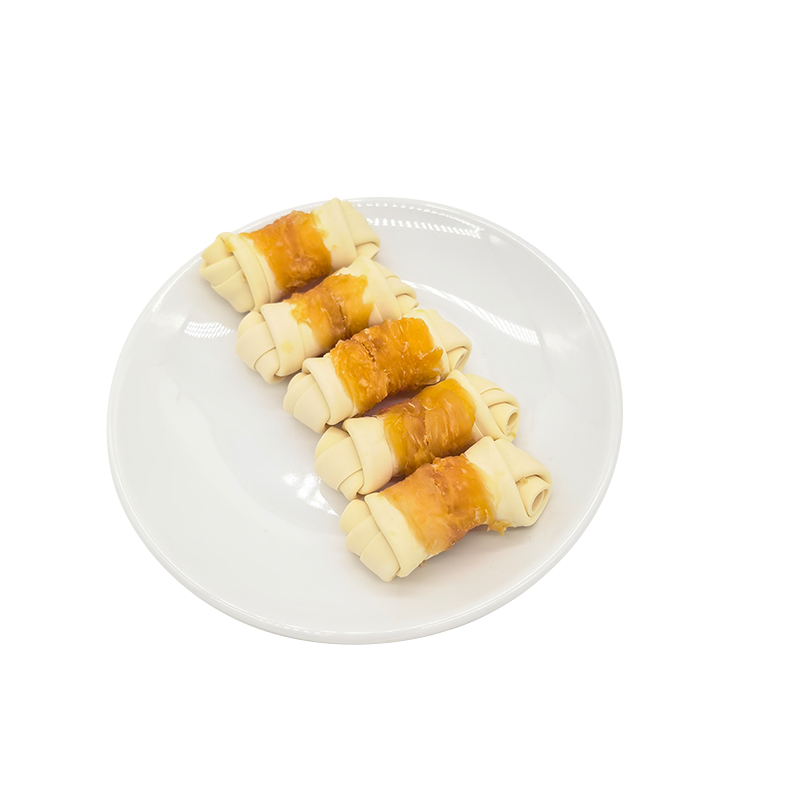
Golosinas para perros envueltas en carne
Nuestras tabletas masticables de hueso de almidón recubierto de pollo KN001 de 2,5 a 3 pulgadas e...Ver más -
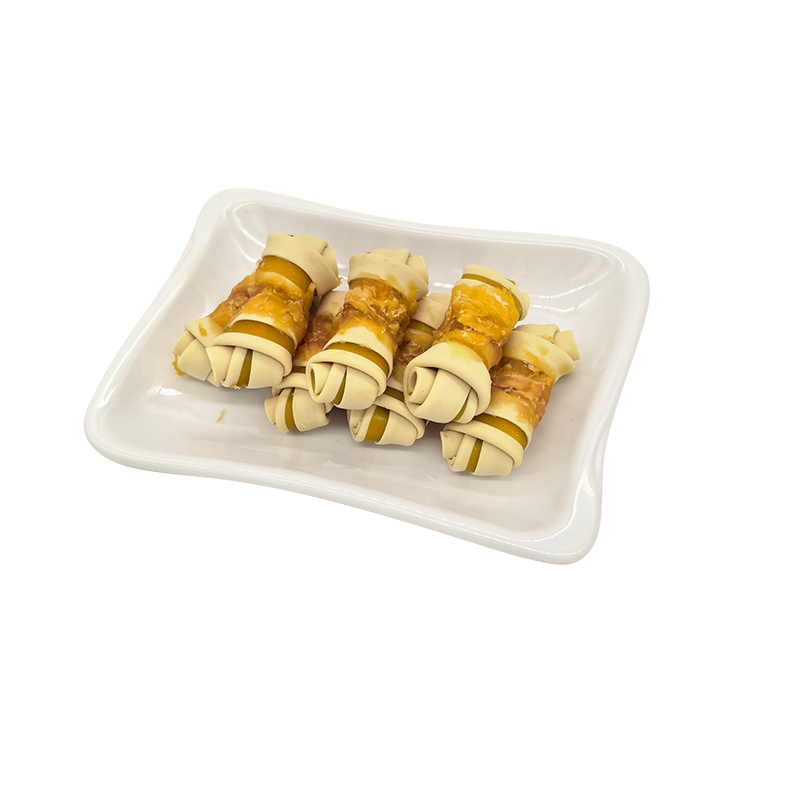
Golosinas para perros envueltas en carne
Las golosinas masticables para perros con proteína orgánica KN003 están elaboradas con una mezcla...Ver más -
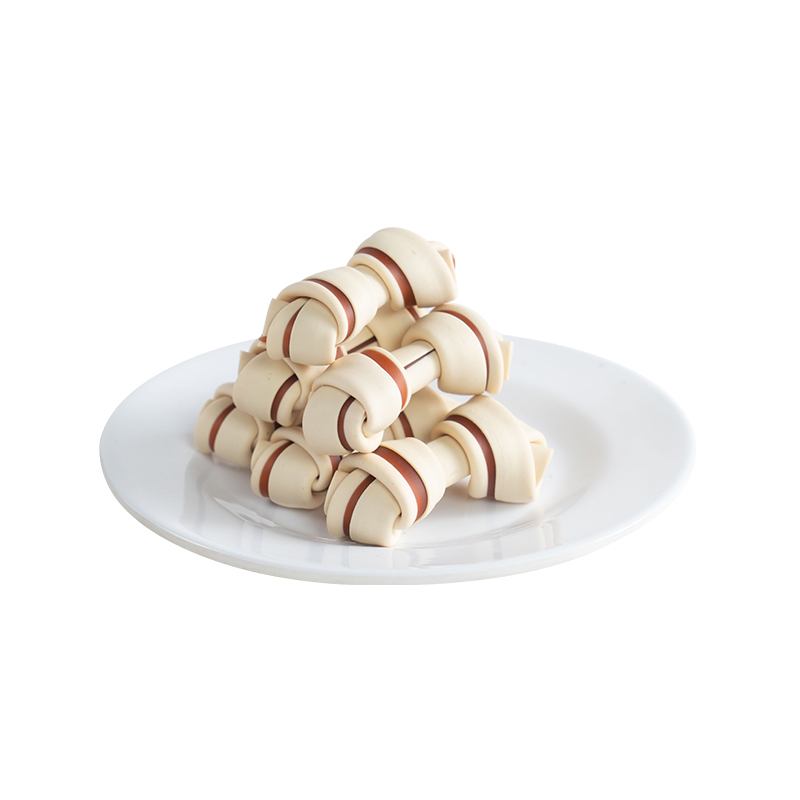
Serie Hueso Anudado
Los snacks para perros con goma de mascar, rechinar los dientes y limpiarse los dientes KN004 son...Ver más -
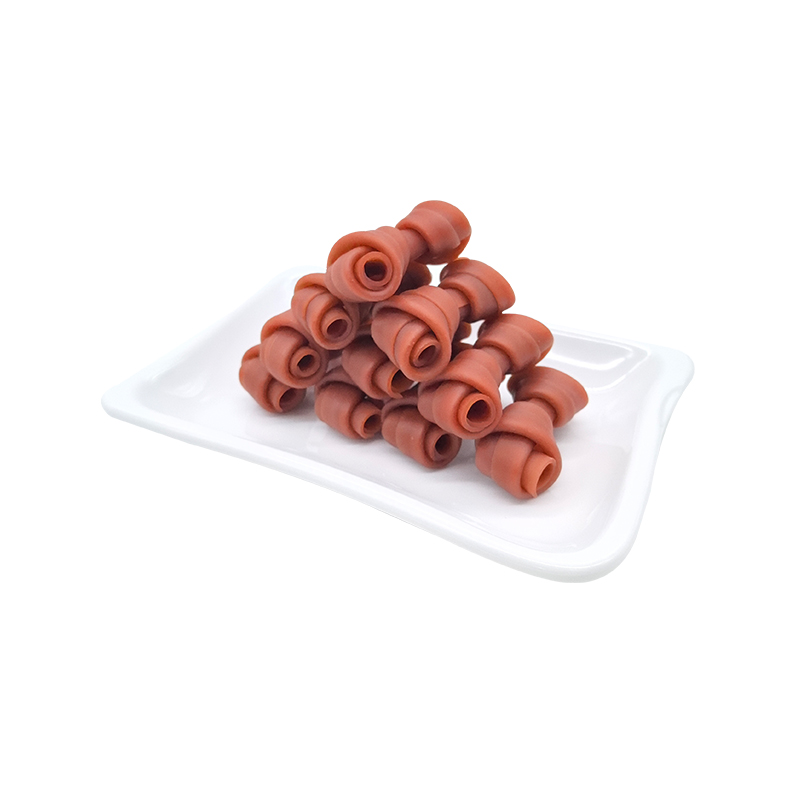
Serie Hueso Anudado
KN005 Snacks para masticar huesos de un solo color para perros, alimento seguro y saludable para ...Ver más -
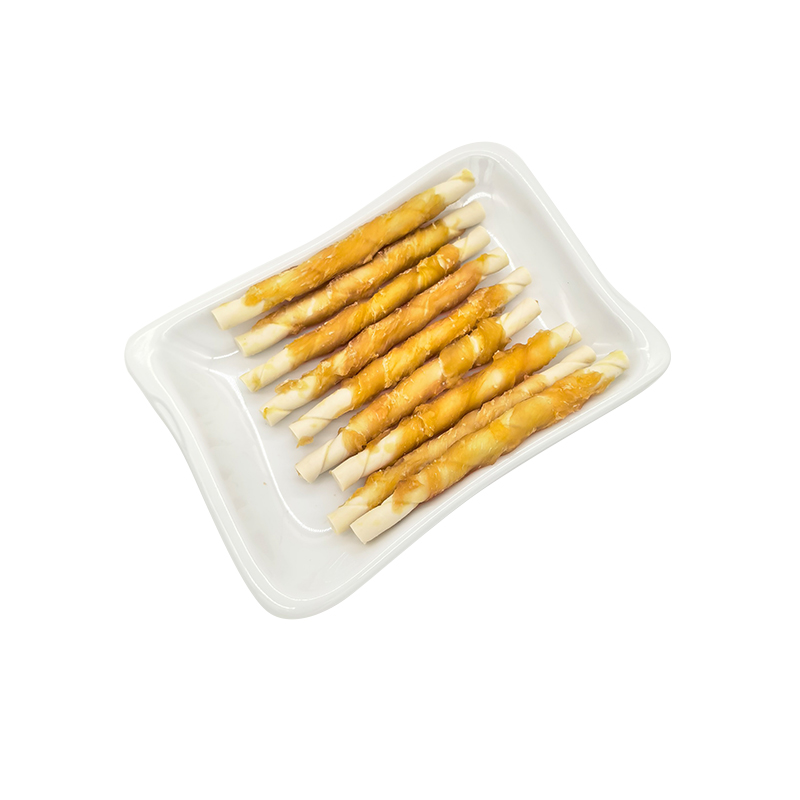
Golosinas para perros envueltas en carne
ST001 Rollitos de pollo para mascotas nutritivos y envueltos en carne de 12 cm con sabor a leche ...Ver más -
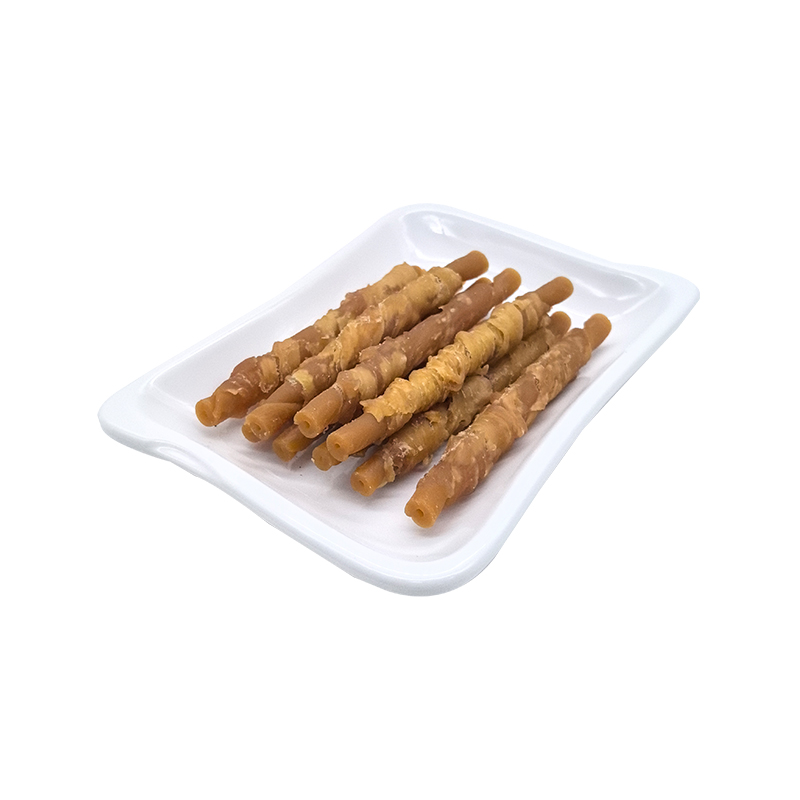
Golosinas para perros envueltas en carne
ST002 Barra masticable dental orgánica para perros con sabor a pollo es un refrigerio saludable y...Ver más
-
2026-11-20
What Makes Dental Sticks Good for Dogs? -
2026-11-20
How to Choose the Best Dog Jerky Treats


ES HORA DE ALIMENTAR
A SUS MASCOTAS
-
Enlaces rápidos
-

La empresa integra funciones de producción e investigación y desarrollo, y su negocio principal se centra en la investigación y el desarrollo y la producción de snacks y masticables para mascotas.
-
Contáctenos
Teléfono/WhatsApp:
+86 18067755187
Correo electrónico:
[email protected]
DIRECCIÓN: No. 358-1, Calle Longqing, Barrio Nanmingshan, Distrito de Liandu, Ciudad de Lishui, Provincia de Zhejiang, China.
